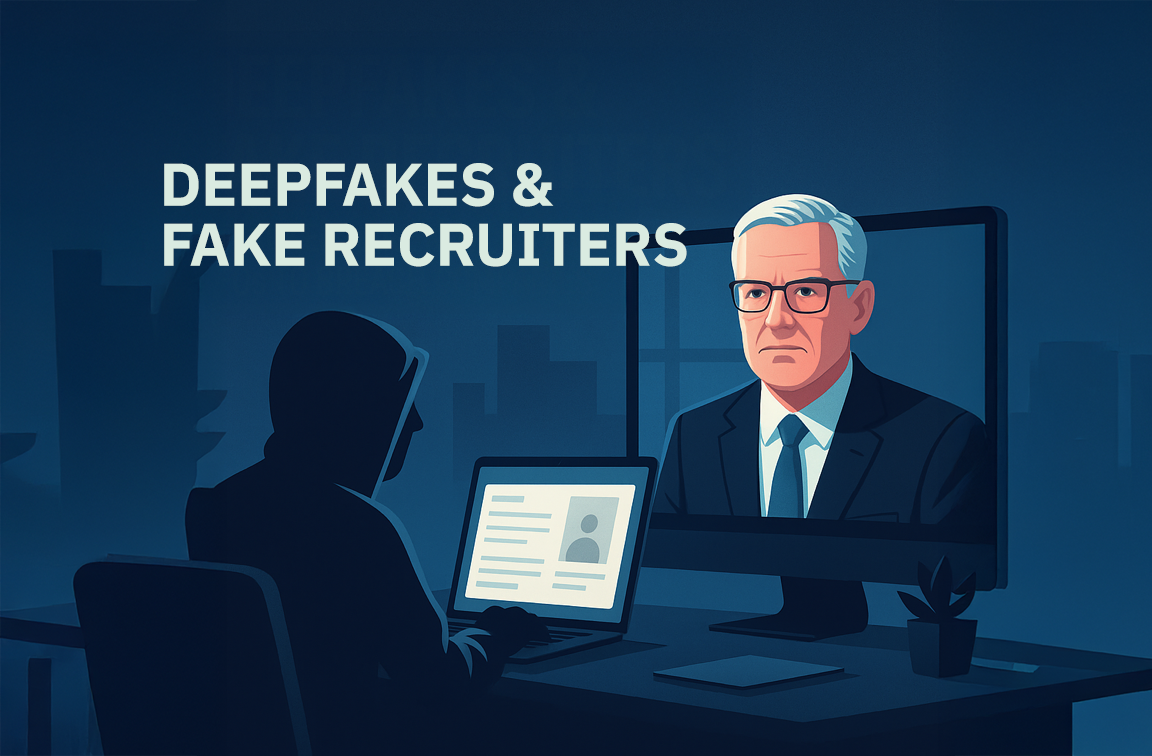
This isn’t sci-fi anymore
We’ve officially crossed the threshold.
The era where AI-generated personas can breach your company—without writing a single line of malware—is not speculative. It’s operational.
Deepfakes, synthetic recruiters, and cloned executives are now actively being used in real-world attacks across multiple continents. This isn’t a lab experiment or a DEF CON demo. These are criminal operations leveraging scalable, low-cost AI tools to exploit the most vulnerable vector in your organization: trust.
What we’ve seen in the field
Across dozens of client-side audits and red-team scenarios in Q2–Q3 2025, Cyber Protocol analysts successfully simulated deepfake-based intrusions in 68% of cases involving HR, finance, and IT personnel.
In controlled environments, we observed that:
- 1 in 3 staff members followed action requests from a synthetic video call without performing any identity validation
- Only 12% of teams had multi-factor workflows that included voice/face confirmation and out-of-band approval
- Most companies rely entirely on visual/video context for verifying leadership during onboarding, credential resets, or payment approvals
Even more concerning:
During an executive impersonation drill, one client’s finance team processed a €275K transfer approval request—based on a deepfaked Teams call and a spoofed sender domain.
It was only stopped by a junior controller who noticed a subtle timing glitch in lip sync.
Why this threat is so effective
There are two core reasons:
- The remote work illusion - Video calls with unfamiliar faces are now routine. People expect imperfect video, lag, and off-screen audio. Deepfakes blend in almost too well.
- Compression and context blindness - In compressed streams (Zoom, Teams), facial artifacts, unnatural blinking, and mismatched audio are easily missed. Meanwhile, people are focused on content—not identity.
Even experienced staff fail to question authenticity when visual, voice, and role expectations seem to align.
What we recommend (and what actually works)
Based on hundreds of test cases and real-world breaches we’ve analyzed, these are the proven defenses that stop deepfake-based intrusions:
1. Split-channel verification
Never authorize wire transfers, VPN access, or account resets based on a single channel. Always confirm identity through a separate medium (internal phone extension, secure chat, or in-person if possible).
2. Watermark all sensitive video calls
Use branded, tamper-proof overlays or internal identity banners during all executive calls. This disrupts video spoofing workflows and provides visual assurance of authenticity.
3. Time-synced callback protocols
When someone requests credentials or money in a call, end the session and initiate a fresh call-back via a known internal route. If they refuse or delay, flag it immediately.
4. Embed deepfake red teaming in onboarding and access policies
Simulate impersonation attempts during internal onboarding and vendor interactions. Teach people what to look for—timing lags, unnatural eye movement, voice drift, or over-rehearsed scripts.
5. Track external signal risk
Monitor your executive team’s public digital footprint. The more content (voice, video, interviews) that exists online, the easier it becomes for attackers to build fakes. Consider reducing unscripted media exposure or watermarking all external video.
Final word
Deepfake-based impersonation isn’t a theory. It’s already happening.
These attacks don’t target code—they target confidence.
They don’t exploit software—they exploit routine.
And they don’t just break in—they’re let in.
Most companies don’t realize how fragile their human-facing security layers are—until they’re spoofed.
Want to know how your team would respond to a cloned CFO asking for wire access?
We run real-time simulations—no scripts, no warning.
Schedule a deepfake readiness test
In the age of AI, trust is no longer visual.
It’s procedural.
— The Cyber Protocol Team